Literacy’s Connection to Guam’s People and Communities
About five years ago, I had a classroom in the corner of campus. It was its own building, actually with high walls and two strong air conditioners that made it seem like an oasis when you walked into the room, compared to the rest of the campus. One day at lunch time, I was walking the hall to the bathroom when I passed a sixth grade science teacher who was disciplining a student. The student was on my side of the campus sweeping the side ramp (my campus is on a hill, by the way). It was rainy season and it was important to keep the ramp clear of any debris so that kids could pass during the rain.
Me, passing by the teacher: Hi! Ms. Ellen!
Teacher: Hi Ms. Patty. I’m making T—-y sweep the ramp for his science grade. He can’t read. I gave an assignment to read the textbook, but he can’t read. I don’t know what to do, so I’m giving him a grade on him sweeping the side ramp. The kid can’t read! What do you end up doing in life or where do you end up working in life if you can’t read? (Teacher shaking her head.)
Me: (whispering to myself) People who can’t read end up in prison.
Me: (yelling) JAIL!
Teacher: (Jumped up shocked with my answer) Gasp!
Me: Yes, I studied that stuff in college. High illiteracy rates mean high prison numbers.
He’s going to end up in prison.
Then I walked away and went to use the bathroom.
In this scenario, what you are also seeing are the costs of having a student that cannot read. Here is Ms. Ellen spending her lunch time making sure T——y’s science grade is accounted for through a creative means of grading. It’s an old school form of grading, but it shows the unconventional wisdom that this teacher had to come up with in order to justify her grading system. The teacher taking that risk to care for her student in unconventional academic terms during her lunch time I’m sure has cost her added stress from the ordeal of dealing with his illiteracy.
But there are more profound worldy effects of illiteracy that this student and WE, as a part of his community, will face in the future.
Being able to read is more than being able to escape into a book and be transported to a different decade or world. Illiteracy means that one can lack the skills necessary to read the dosage/warnings on medicine bottles, follow cooking instructions, properly manage finances, or apply for jobs that allow one to live above the poverty line. The cost of Illiteracy in the United States is estimated to be over 300 billion dollars, according to a report written by the World Literacy Foundation. In the same report, it is said to cost the global economy 1.2 trillion dollars. (Van Pelt, 2018)
On Guam, there are many organizations that address literacy in one form or another. The International Reading Association made up of many public and private school teachers interested in promoting reading meets every month to promote literacy in the local schools. The Guam Public Libraries in various village locations cater to the reading and literacy needs of the communities they serve.
Communities built on a foundation of literacy will allow the creativity and energy of more voices to be heard and change our communities for the better through civic engagement, lessened costs (such as to our prison and healthcare systems), and a healthier society. The first step to beating illiteracy is right at your fingertips: get involved with local outreach groups, volunteer for literacy organizations …, and donate books to schools, libraries, and other organizations that need them — because illiteracy is 100% preventable. (Van Pelt, 2018)
Like the annual Book Swap held at Oceanview Middle School, chaired by the seasoned and distinguished Reading teacher Ms. Carmen Paulino, Oceanview has taken steps to promote literacy at the school level, making sure each student walks away with a book they personally chose to read at an annual event where books are collected and displayed for them to select and enjoy. And most importantly, take home.
If you have the chance to promote reading in your household, with your children or with your family, I’m sure you will understand the rewards that come from sparking joy and interest in the minds of the youth. These youth will then spark interests and joy in themselves and radiate that joy to others, including you. That spread of joy and radiant smiles will then spread to your extended family, your village, your community, and beyond.
Spread the Love. Spread the joy of Reading.
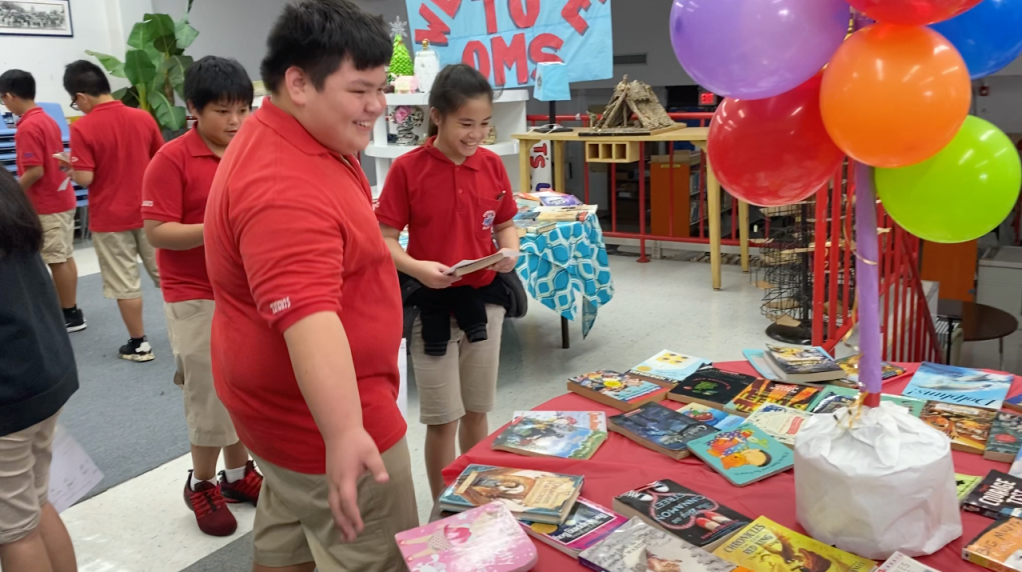
held on January 30, 2020.
Source: Van Pelt, Jennifer. (2018, Feb. 22) What is the Connection between Literacy and Economic Development?. Words Alive!
 Ice Cream Banana